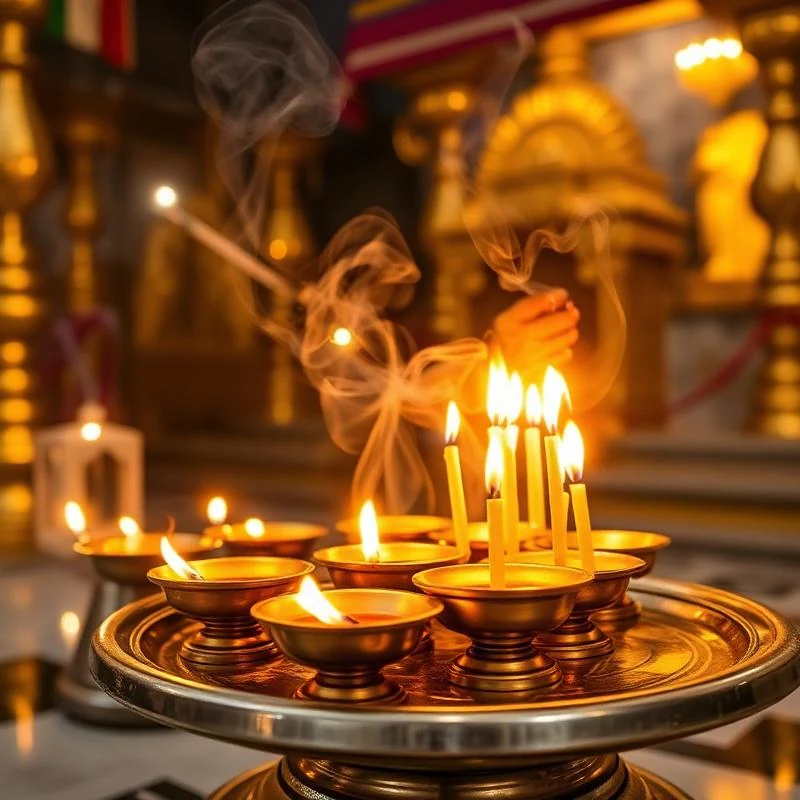
Well before sunrise, while much of the city is still asleep, the temple is already full of music. Mangala Arati starts at 4:30 AM, and the songs sung in those early hours are not filler. Each one carries centuries of devotional tradition and has a definite place in the order of worship.
Why worship is wrapped in song
In the Gaudiya Vaishnava tradition, formal worship is seldom silent. Every arati, the ceremonial offering of light, incense and other items to the deities, begins and ends with singing, usually compositions by earlier acharyas of the disciplic line. They are not picked at random. Each song belongs to a certain time of day or stage of the ceremony, and singing them in sequence is part of proper worship etiquette.
The first morning prayers, for example, are addressed to the spiritual master before the deities, a reminder that in this tradition one approaches Krishna through the guru and not around him. Later in the day other songs accompany Guru Puja, the Bhagavatam class and the evening arati, with the mood moving from reverent to joyful according to the hour.
Poetry that is still alive
Many of these songs were composed by Bhaktivinoda Thakura, Narottama Dasa Thakura and other Vaishnava poet-saints of the 16th to 19th centuries. They are still sung every day in temples around the world as they were written, often in Bengali or Sanskrit rather than translation. Learning them is itself seva. New devotees at our temple often begin right here, joining the kirtan group and gradually picking up the tunes and rhythms handed down by earlier generations.
You are invited to join, not just watch
Temple kirtan is not a concert. It is meant to be shared, so visitors are welcome to clap, sing along before they know the words, or just sit and listen. Many long-time devotees say their real connection to this tradition began not with a philosophical idea but with a melody that stayed with them after they left.
If you come for Mangala Arati, do not worry about the words. The tunes have a way of teaching themselves.