While much of India is still sweeping up fireworks the morning after Diwali, our temple turns to a different kind of celebration. It has no lamps at its centre. Instead there is a mountain of food, offered to a hill.
The hill and its story
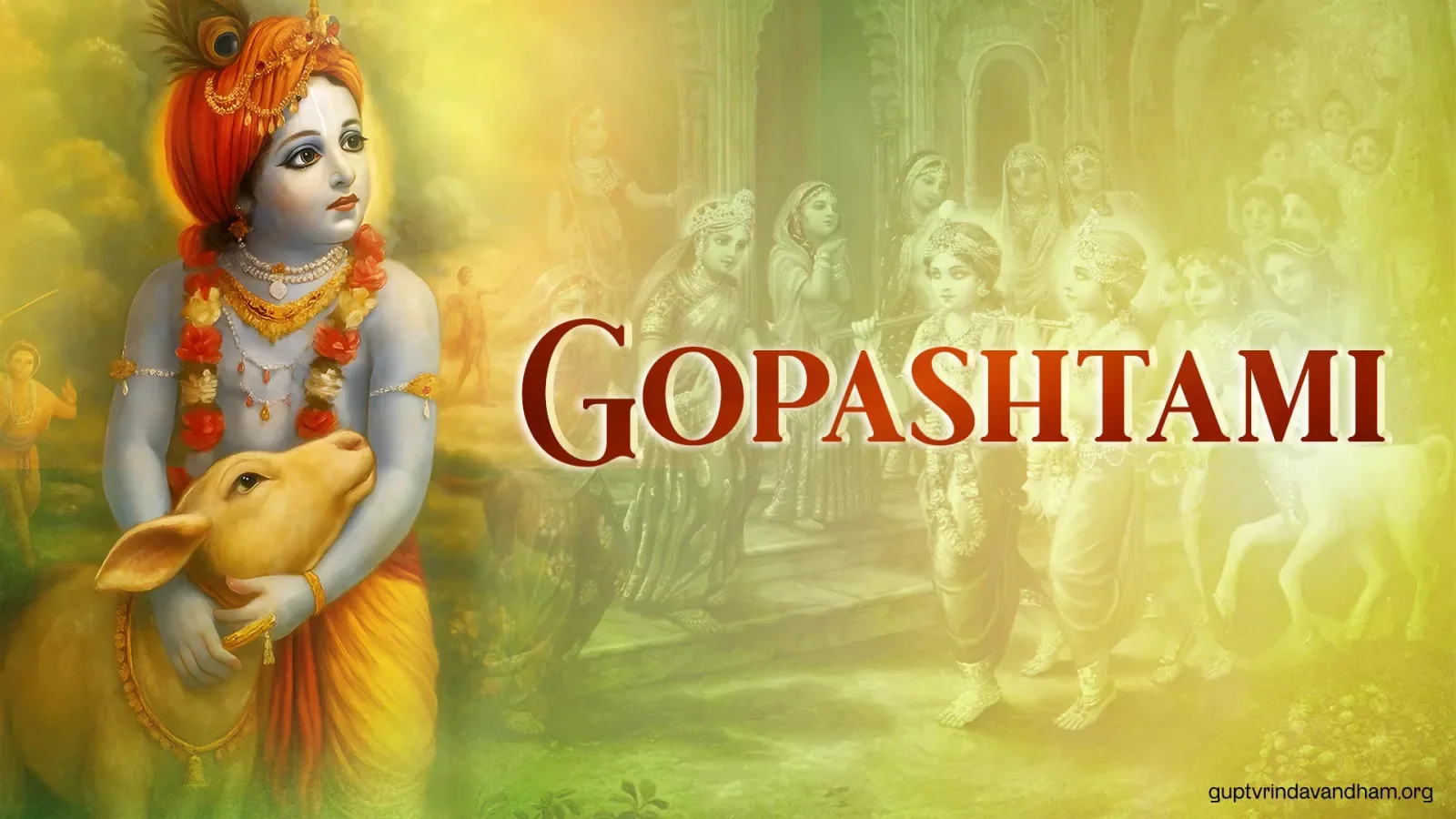
The Srimad-Bhagavatam tells how the cowherd people of Vraja used to make a yearly offering to Indra, the god of rain, to thank him for the rains that fed their cattle and crops. Young Krishna questioned this custom. It was Govardhan Hill, He pointed out, that gave their cows grass, water and shelter every day, and He suggested they direct their worship there.
The community took His advice. Indra, offended, unleashed a terrible storm on Vraja. Krishna answered by lifting Govardhan Hill on the little finger of His left hand and holding it over them like an umbrella for seven days and nights. Every person and animal found shelter until Indra gave up and the rain stopped.
The lesson beyond the miracle
Devotees often say that the point of this pastime is less Krishna's strength than where our gratitude belongs: with what really sustains us, and not with remote powers we imagine we must placate. In a way it is one of the oldest arguments for a more grounded, ecologically aware kind of worship.
Annakut, the mountain of food
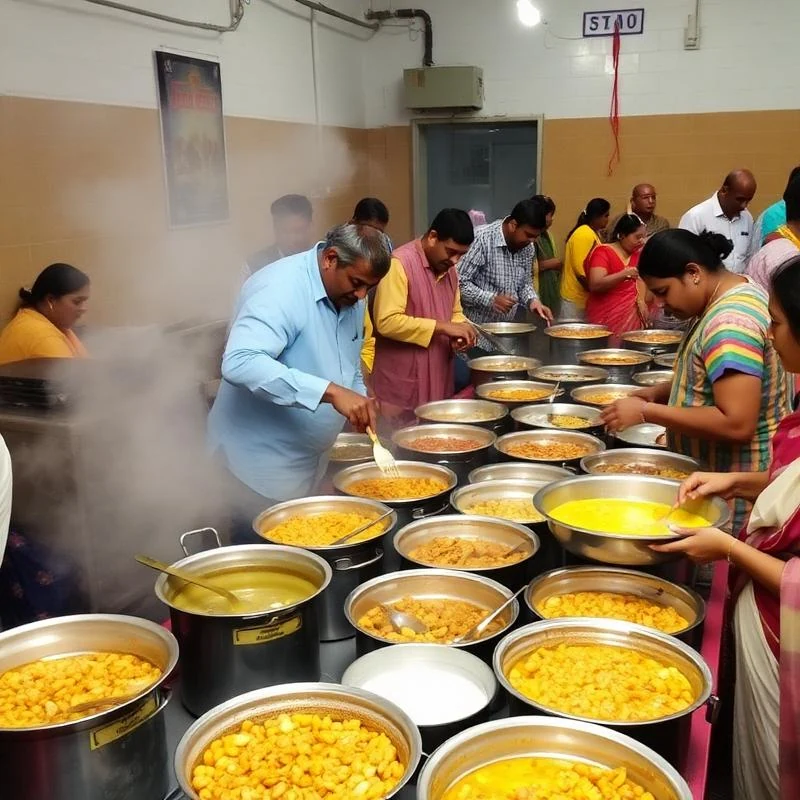
Our Govardhan Puja centres on Annakut, "mountain of food". Dozens of dishes are prepared and arranged before the Deities to represent Govardhan Hill itself. Devotees cook in the temple kitchen through the day before, and by evening the altar is covered from edge to edge with preparations, from plain rice and dal to elaborate sweets, all offered together as an overflowing expression of abundance and thanks.
Afterwards this prasadam is served to everyone present, often hundreds of plates by the end of the evening. The lesson of the pastime becomes something you can taste: a shared meal, freely given.
If you join us for Govardhan Puja, come hungry. The Annakut offering is meant to be experienced and not just watched.