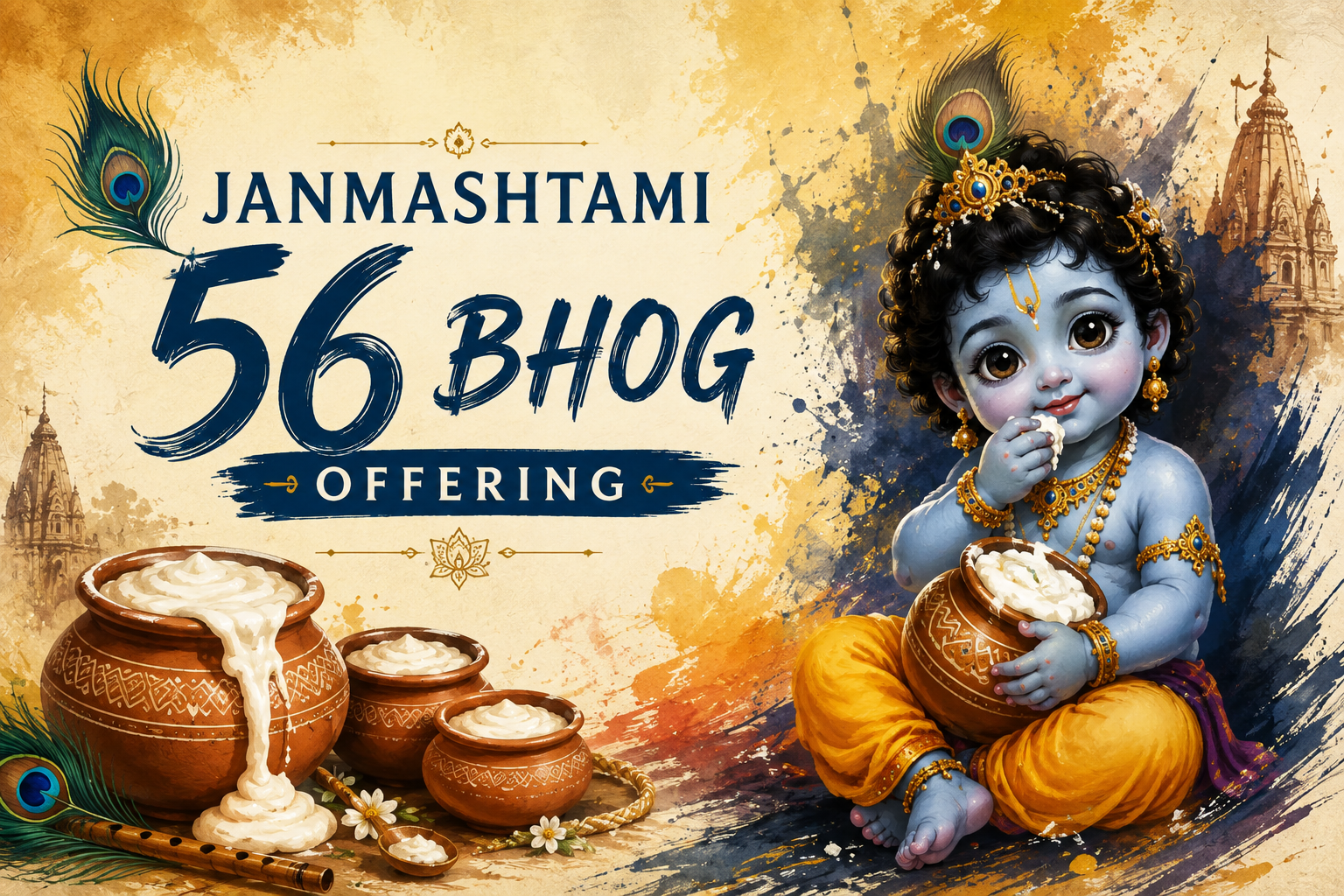
Chappan Bhog is an offering of 56 dishes, and behind it is a story of love. When Lord Krishna lifted Govardhana Hill to shelter Vrindavan, He went without food for seven days. Because He normally ate eight times a day, the people of Braj, once the seven days were over, joyfully prepared 56 items for Him: eight meals for each of seven days. The offering has been remembered ever since as a gesture of thanks and affection.
Below you will find the traditional list, regional variations and some practical advice for presenting the bhog, so you can offer it in the same mood at Janmashtami or Govardhana Puja.
The Meaning of Chappan Bhog
Chappan means fifty-six. The offering usually includes sweets, grains, savouries, dairy items, fruits, dry fruits, pickles, chutneys and other sattvik foods. Many devotees prepare it on Krishna Janmashtami, but the custom is older and wider than one festival: at the Jagannath Temple in Puri, a large variety of offerings is made to Lord Jagannath every day.
Once food has been offered to the Lord with devotion, it becomes mahaprasadam, sanctified food carrying His mercy. The Skanda Purana also glorifies honouring such prasadam.
The 56 Bhog List
Use this list when you plan the offering so nothing is forgotten. Every item should be cooked without onion or garlic, with cleanliness and in a sattvik way.
| Sweets | Savouries | Grains and Breads | Dairy |
|---|---|---|---|
| 1. Makkhan Mishri | 8. Mathri | 15. Poori | 22. Panchamrit |
| 2. Kheer | 9. Pakoda | 16. Roti | 23. Curd |
| 3. Rasgulla | 10. Kachori | 17. Khichdi | 24. Ghee |
| 4. Peda | 11. Bhujia | 18. Pulao | 25. Butter |
| 5. Gulab Jamun | 12. Shakkarpara | 19. Dal | 26. Malai |
| 6. Malpua | 13. Namak-Para | 20. Kadhi | 27. Honey |
| 7. Rabri | 14. Aloo Tikki | 21. Meetha Chawal (Sweet Rice) | 28. Paneer |
| Fresh Fruits | Dry Fruits and Nuts | Drinks | Pickles and Accompaniments |
|---|---|---|---|
| 29. Banana | 36. Almonds | 43. Shikanji | 50. Mango Pickle |
| 30. Mango | 37. Cashews | 44. Coconut Water | 51. Dhaniya Chutney |
| 31. Apple | 38. Pistachios | 45. Thandai | 52. Imli Chutney |
| 32. Grapes | 39. Raisins | 46. Almond Milk | 53. Papad |
| 33. Pomegranate | 40. Dates | 47. Lassi | 54. Murabba |
| 34. Plum | 41. Walnuts | 48. Aam Panna | 55. Sauf-Elaichi |
| 35. Guava | 42. Dry Coconut | 49. Rose Sharbat | 56. Paan/Supari |
How the List Changes from Region to Region
No single menu is fixed. What stays constant is that everything is made purely and without onion or garlic.
Braj (Mathura-Vrindavan)
Krishna is especially fond of sweets and dairy, so Braj offerings lean toward makkhan-mishri, peda, rabri, ghewar, jalebi, malpua and mathri.
Odisha (Jagannath Temple, Puri)
The daily Mahaprasad features many rice dishes, such as Kanika, Dahi Pakhala and Khichdi, along with sweets like Khaja, Gaja, Tadia and Arisa Pitha.
Mithilanchal (Bihar)
For Janmashtami, Bihar's version includes vegetable fritters called taura, such as baingan, aloo and parwal taura. Sweet items commonly include makhane ki kheer, pua and khaja.
Recipes will always differ, but the Lord looks at the heart:
patraṁ puṣpaṁ phalaṁ toyaṁ yo me bhaktyā prayacchati
tad ahaṁ bhakty-upahṛtam aśnāmi prayatātmanaḥBhagavad-gita 9.26
Translation: If someone offers Me with love and devotion a leaf, a flower, a fruit or water, I will accept it.
Planning Chappan Bhog for a Large Gathering
Start with the full list in hand and group the dishes by type:
- Sweets (18-20 types): laddoos, pedas, barfis and similar items, perhaps with suji halwa, which is easy to make.
- Savouries (10-12 types): mathri, namak pare, pakoras and so on.
- Grains and main dishes (6-8 types): small servings of puri, rice, dal, kadhi and other sattvik items.
- Dairy and liquids (6 types): milk, rabri, curd and butter in small bowls.
- Extras (5-6 types): fruit, dry fruit, pickles and papad.
Keep the following in mind:
- Make small portions of each item, which keeps things hygienic, organised and easy to distribute.
- Cooking the offering yourself is ideal. If you cannot, family members or trusted traditional caterers can help with categories such as sweets and savouries.
- Place a tulasi leaf on each preparation before it is offered to Krishna, then distribute the mahaprasadam among everyone present.
Keeping the Offering Clean and Orderly
Purity
- Set aside a clean, separate space for preparing and arranging the bhog, away from the main kitchen and guest seating.
- Those handling the food should have bathed and put on fresh clothes.
- Use a separate clean spoon for each dish and avoid touching the food while serving it into bowls.
- Keep the area restricted, and do not allow shoes or slippers near the dishes prepared for the Lord.
Layout
- Use a stepped or pyramid arrangement so all 56 items can be seen.
- Cover each bowl with a clean lid or thin cloth until the offering is made.
- Add small labels so volunteers know which dish is which.
Ideas for Decorating the Table
- A lotus-patterned thali with 56 small compartments.
- Laddu Gopal in the centre, with the dishes arranged around Him in a circle.
- Miniature clay kulhads for dairy preparations, for a Braj feel.
- Brass diyas at the corners for a temple atmosphere.
- Peacock feathers between layers or as a backdrop.
The Heart of the Offering
From the daily Mahaprasad at Puri to a simple thali at home, the essence is the same: recreate the affection the people of Braj showed Krishna after Govardhana. The number of dishes matters less than the purity, devotion and joy with which you serve. Whether you feed hundreds or a single family, an offering made this way honours His Govardhana pastime.