kṛṣi-go-rakṣya-vāṇijyaṁ vaiśya-karma svabhāva-jam
paricaryātmakaṁ karma śūdrasyāpi svabhāva-jamBhagavad-gita 18.44
Translation: Farming, cow protection and trade are the natural work of the vaishyas, while labour and service for others are the natural work of the shudras.
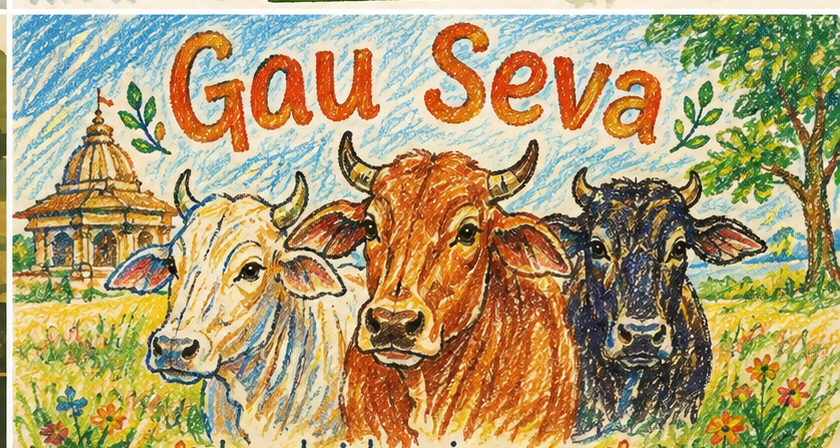
Why does Sanatana Dharma hold the cow in such tenderness? The answer begins with Krishna Himself, who lists cow protection among the natural duties that keep society healthy. This guide looks at what Gau Seva means, what the scriptures say about it, what benefits tradition attributes to it, and the simple ways anyone can take it up today.
Understanding Gau Seva
gau sevā paramo dharmaḥ
Gau Seva is humble, practical service to cows: feeding them, giving them shelter and medical care, and treating them with affection. The Puranas describe the cow's body as the abode of all 33 koti devatas, which is why she is never regarded as an ordinary animal.
The practice also has an earthly side. Cow dung and gaumutra serve as natural fertilizer and can be used for renewable energy, so caring for cows supports sustainable farming and a cleaner environment. This is the vision Srila Prabhupada stressed again and again.
The Cow in Vedic Culture
Vedic society was built around the cow, because her care draws a person toward Krishna consciousness. After baby Krishna survived Putana, the elder ladies of Vraja protected Him in a traditional way:
yaśodā-rohiṇībhyāṁ tāḥ samaṁ bālasya sarvataḥ
rakṣāṁ vidadhire samyag go-puccha-bhramaṇādibhiḥŚrīmad-Bhāgavatam 10.6.19
Yashoda, Rohini and the gopis waved a cow's tail around the child and performed protective rites with cow products. Even the Lord's own mother looked to the cow for shelter, which shows that the cow is not only protected by us but also protects us.
Five substances from the cow are considered pure: milk, yogurt, ghee, dung and urine. Together they are called pancha-gavya. Looking after cows is seen not as a mere rule but as gratitude toward the one who sustains human life.
Krishna and His Cows
Krishna's connection with cows is personal, not symbolic. His name Govinda means the one who gives joy to the cows. The Brahma-samhita describes Him in Goloka Vrindavan as an eternal cowherd boy surrounded by countless surabhi cows.
It follows that every act of Gau Seva is a small offering to Krishna. Gopashtami, which marks the day He took up full-time cowherding, is observed by devotees everywhere as a reminder that Gau and Gopala cannot be separated.
What the Scriptures Say
In the Bhagavatam, Krishna lists ways of worshipping Him, one of which is feeding grass to cows:
sūrye tu vidyayā trayyā haviṣāgnau yajeta mām
ātithyena tu viprāgrye goṣv aṅga yavasādināŚrīmad-Bhāgavatam 11.11.43–45
Translation: Worship Me in the sun with Vedic hymns, in the fire with offerings of ghee, in learned brahmanas through hospitality, and in cows by offering grass and other fodder.
āyudhānām ahaṁ vajraṁ dhenūnām asmi kāmadhuk
prajanaś cāsmi kandarpaḥ sarpāṇām asmi vāsukiḥBhagavad-gita 10.28
Translation: Of weapons I am the thunderbolt; among cows I am the surabhi; of causes for procreation I am Kandarpa, and of serpents I am Vasuki.
Benefits Traditionally Associated with Gau Seva
A calmer mind and a cleaner surrounding
Cows are gentle, and time spent feeding and tending them softens the heart. Many people find it settles the mind and improves the atmosphere around them.
The Lord's mercy
Gau Seva is regarded as a simple, sincere way to attract divine grace and protection for oneself and one's family.
Relief in difficult phases
Traditional astrology often recommends serving cows to ease the effects of Saturn, Rahu and Ketu. More lastingly, the service builds humility and compassion, which help in any hard period.
Prosperity and progress
The cow is linked with Kamadhenu, the wish-fulfilling cow. Faithful service is believed to bring blessings in education, livelihood and other areas of life.
Well-being
With a pure intention, caring for cows can reduce stress and bring quiet satisfaction.
Peace for ancestors
Tradition holds that Gau Seva done with devotion can bring peace to departed ancestors and harmony to the family across generations.
Ways to Begin
Feed cows near you
Cows often wander through neighbourhoods. Offer fresh grass, chapati or jaggery each day, and treat them kindly instead of chasing them away. Small acts done with devotion count.
Gau Daan
Contributing to a cow's lifelong care is regarded in Vedic tradition as one of the highest charities. You can help a nearby gaushala or sponsor medical care for rescued cows.
Join the cow festivals
Gopashtami and Govardhana Puja, when cows are worshipped and honoured, are joyful occasions to serve, and they teach children to value Gau Mata. Contributions on Janmashtami and Radhashtami are likewise considered especially meritorious. Whatever the amount, support for a reputable gaushala goes directly toward fodder, shelter and veterinary care.
Cow Protection in Srila Prabhupada's Mission
Srila Prabhupada made cow protection a pillar of ISKCON. He once asked some devotees, "What is a cow?" When they answered that she is an animal, he corrected them: she is the mother of humanity. He taught that a civilization flourishes through protecting cows and brahmanas, and that when cow protection is neglected, dharma declines further in Kali-yuga.
A mind prepared for higher understanding
He recommended cow's milk because it nourishes the body and increases sattva-guna, giving the mental clarity needed to understand spiritual subjects.
Fewer karmic reactions, more peace
He taught that violence against cows brings collective suffering, while protecting them promotes harmony and safety.
Economic sufficiency
Human society, he said, basically needs grain and cows. Milk, ghee and yogurt feed people, while dung and urine fertilize the fields. ISKCON's farm communities, such as New Vrindaban in the United States, were founded to show this in practice, in keeping with his ideal of "Simple Living, High Thinking."
In Closing
Gau Seva shows that real abundance comes through selfless service. It asks no great effort: good food, safe shelter and proper medical care are enough. Each person can take part according to his or her capacity, and even a modest gift becomes a sincere offering to Lord Krishna.