Fasting on Janmashtami is one of the most cherished ways devotees honour Lord Krishna, the Supreme Personality of Godhead. People often wonder what the fast is good for, whether children can keep it, and what elderly or pregnant devotees should do. This guide answers these questions in line with Vaishnava tradition and the Bhagavad-gita, Srimad-Bhagavatam and Chaitanya-charitamrita, and covers what to eat, what to avoid and how to break the fast.
Three Ways to Observe the Fast
| Style | What it involves |
|---|---|
| Nirjala | The strictest option: no food and no water for the whole day. |
| Phalahar | A gentler choice: only fruits, milk, juices and water. |
| Single meal | For those whose bodies cannot manage a full-day fast: one meal, free of grains and beans. |
Spending the Day Step by Step
The fast is meant to cleanse body, mind and heart and bring us close to the Lord. A little structure helps it do that.
1. Begin before sunrise
Rise in Brahma-muhurta. Offer a prayer to your spiritual master, or if you have none yet, chant Hare Krishna once. Bathe, put on clean clothes and apply tilaka.
2. Chant the maha-mantra
Go to your altar with your japa beads and chant:
Hare Krishna Hare Krishna Krishna Krishna Hare Hare
Hare Rama Hare Rama Rama Rama Hare Hare
A beginner can aim for one round of 108 names. On Janmashtami, 16 rounds is the recommended target for those who can manage it.
3. Hear about Krishna
Read or listen to at least one chapter or one pastime from a scripture such as the Srimad-Bhagavatam or Bhagavad-gita As It Is by A.C. Bhaktivedanta Swami Srila Prabhupada. Hearing the Lord's pastimes is said to clear away material contamination.
4. Take the vow and fast
Begin with a sankalpa in your own name: "For the removal of all sins, and with Lord Vasudeva (Krishna) as the supreme goal, I will observe this fast on Krishna Ashtami of the month of Bhadrapada." Keep the fast until midnight, then break it with light food such as fruit, milk or roots. Throughout the day, stay away from grains, beans and ordinary vegetables.
5. Mark the Lord's footprints
Draw small lotus footprints of Krishna from the house entrance to the altar, as if welcoming Him into your home.
6. Prepare the bhoga
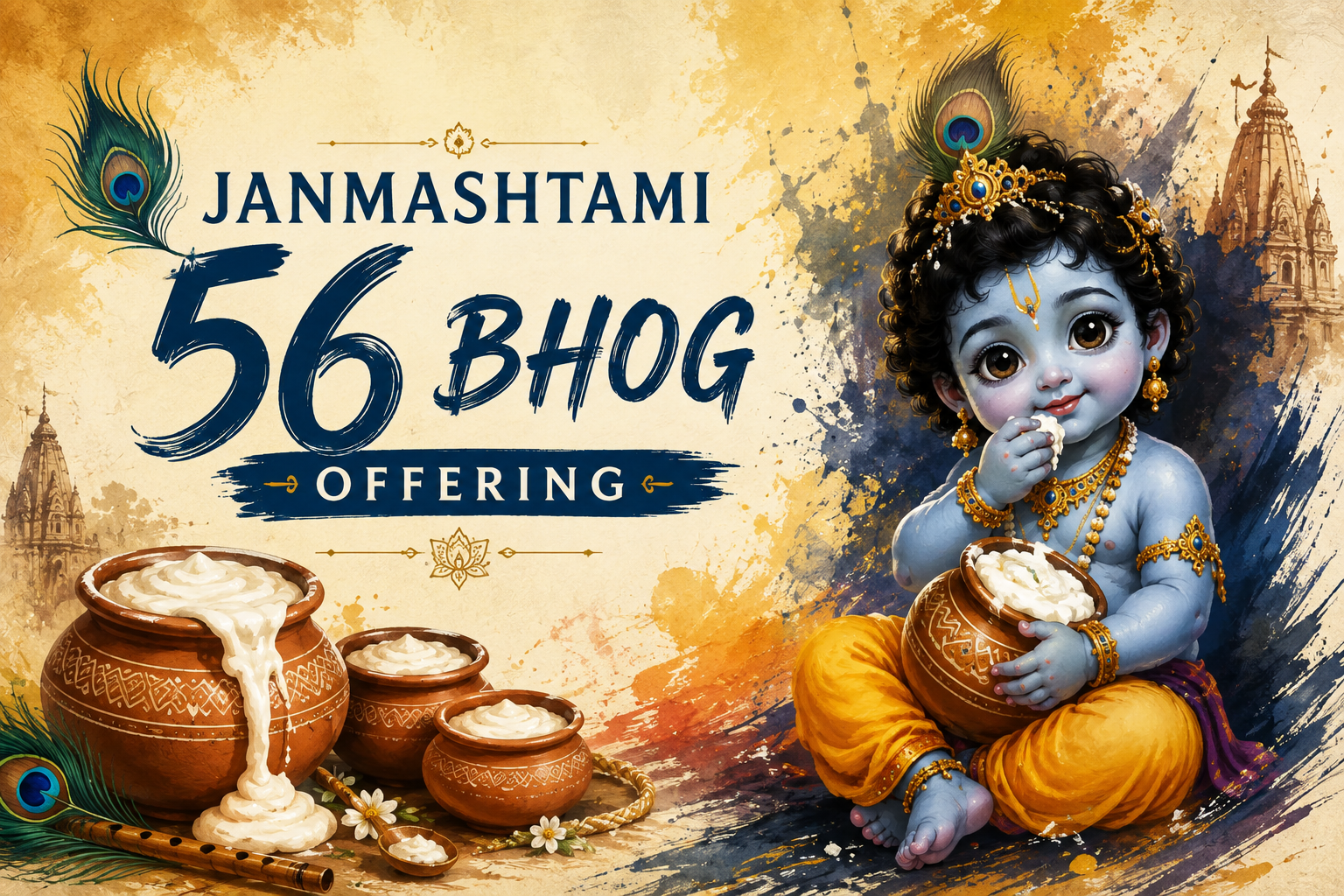
Choose good-quality ingredients for the offering: fresh fruit, sweets, vegetables and dry fruits. Cook sattvic food without onion or garlic. Krishna says in the Bhagavad-gita that if one offers Him a leaf, a flower, a fruit or water with love and devotion, He will accept it.
7. Worship the Deities
If you have Radha-Krishna, Laddu Gopal or other Deities at home, perform abhishekam, offer new clothes and worship them with auspicious mantras or kirtana.
Guidelines to Keep in Mind
- Keep the mind clean. Avoid anger and gossip, and fix your attention on chanting and prayer.
- Do not break the fast early. Wait until midnight and the Nishita-kala timing.
- Ease back into eating. After a long fast, start with small portions of pure sattvic food so that digestion is not shocked.
- Fast within your capacity. The fast is not meant to harm anyone; it is observed yathashakti, according to your physical and mental strength.
- Skip the daytime nap. Use that time for chanting and singing the Lord's glories.
- Avoid worldly chatter. Let Krishna stay at the centre of your thoughts.
- Keep your space clean. Tidy the home and altar and wear fresh clothes before worship.
- Leave out entertainment. Rather than TV or films, spend the day on kirtana, japa and reading.
What to Eat and What to Avoid
| Category | Permitted | Avoid |
|---|---|---|
| Fruits and dry fruits | Banana, apple, pomegranate, grapes, almonds, cashews, raisins | Nothing; all fruits are fine |
| Dairy | Milk, curd, paneer, ghee, milk sweets | Nothing; dairy is allowed |
| Flours and grains | Kuttu (buckwheat), singhara (water chestnut), rajgira (amaranth) | Wheat, rice, ordinary flour and common grains |
| Fasting dishes | Sabudana khichdi, sabudana kheer, singhara puri, makhana kheer | Regular curries and anything made with grains or lentils |
| Vegetables | Potato, sweet potato, pumpkin, arbi | Onion, garlic and everyday spiced vegetables |
| Seasoning | Rock salt (sendha namak), cumin, black pepper | Table salt and turmeric-heavy spice mixes |
| Drinks | Coconut water, fruit juices, milk drinks | Alcohol, tea, coffee, caffeinated drinks |
| Other foods | None | Non-vegetarian food, packaged and junk food |
| Water | Allowed in the Phalahar fast | Not taken until midnight in the Nirjala fast |
Breaking the Fast
After the midnight abhishekam and aarti, the fast is ended at the proper parana time. In the year this guide was prepared, the parana time was after 6:08 AM on 5 September; check a current panchang for the year you are observing. First take charanamrita and the prasadam offered at the midnight aarti, then have the rest of your meal. Follow the Nishita-kala muhurta after the midnight abhishekam.
Benefits of the Fast
Spiritual
- Deeper devotion: with the usual meals set aside, the mind turns more easily to Krishna.
- Purification: traditional texts such as the Padma Purana and Skanda Purana say that sincere observance of this vrata removes the reactions of past sins.
- Self-control: resisting bodily urges builds discipline and supports spiritual growth.
Physical and mental
- Digestive rest: avoiding heavy grains gives the system a break.
- Light eating: sattvic foods like fruit, dairy and root flours suit the body during the monsoon.
- Clarity: less energy spent on heavy digestion leaves the mind calmer and more focused for devotional activity.
A Closing Thought
The Lord values sincere devotion above strict rule-following. Those who cannot fast, such as pregnant women or elderly devotees, can still receive His grace through prayer, chanting and remembrance. This Janmashtami, let us spend the whole day thinking of the Lord who loves us most.