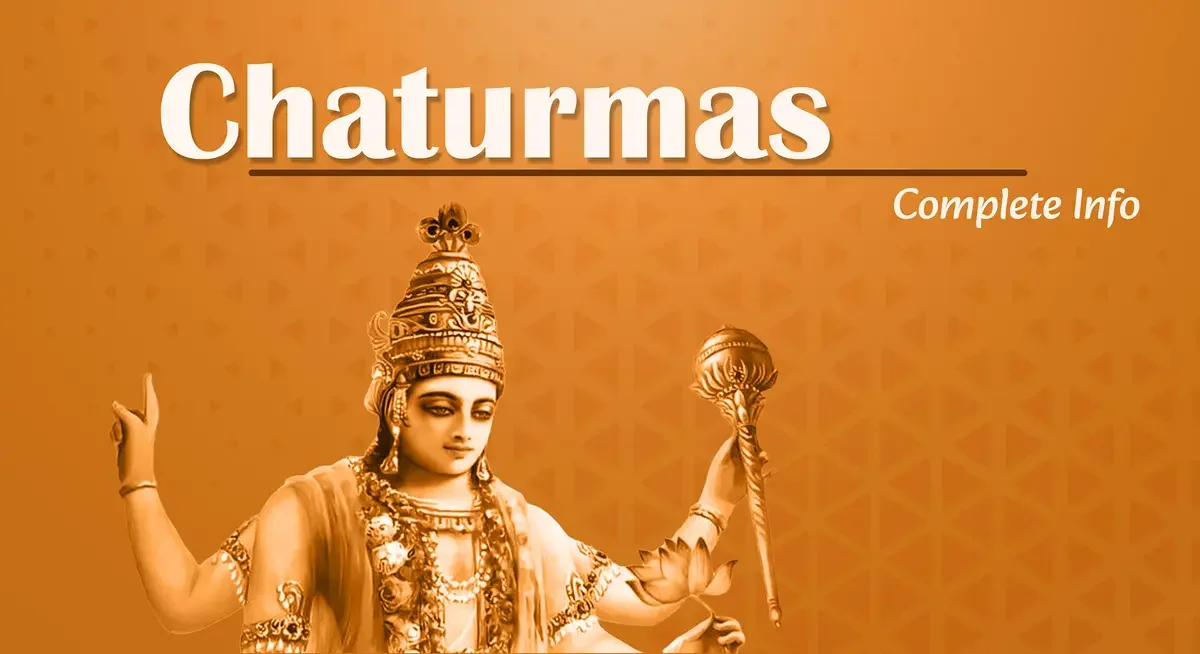
Chaturmas, literally "four months," is a season of extra devotion, simple living and self-restraint. It runs through the rains, from the Hindu month of Ashadha (June-July) to Kartika (October-November). Vaishnavas keep the Chaturmasya Vrata and increase their service during these months, reckoning them by either the lunar or the solar calendar.
When Chaturmas 2026 Begins and Ends
In 2026, Chaturmas starts on 29 July and ends on 24 November, which is Utthana Ekadashi. Some general Hindu Panchangs list it a few days earlier, from 25 July to 20 November 2026.
The difference arises from method. The first set of dates goes by the tithi that is present at Brahma Muhurta (around sunrise), while many Panchangs use a midnight-based lunar calculation.
Why These Months Matter
Devotional service, austerity, simple habits and vows kept in this season are said to bring the special favour of Lord Sri Krishna.
The Bhavishya Purana puts it strongly: "One who passes the Chaturmasya season without observing religious vows, austerities and chanting of japa, such a fool, although living, should be considered to be a dead man."
In a conversation with Mother Earth (Bhu Devi), Lord Varaha says that these four months of the year are a time when any charity, vow, japa or homa gives countless merits, far more than the same acts in other months.
It is also said that during this period the sun travels in the southern course, and Lord Narayana and the demigods go to sleep. This sleep is not ordinary. It is yoga-nidra, a display of the Lord's internal potency.
Because the Lord and the demigods are resting, materially auspicious functions such as marriages, bhumi-puja and house-entering ceremonies are avoided. Spiritual practice, on the other hand, should be increased to receive the Lord's blessings.
Foods to Give Up, Month by Month
The Chaturmas vow includes giving up one category of food in each month. The sole aim is to practise austerity and please Krishna.
Month 1: leafy greens
Avoid shak vegetables such as spinach (palak), fenugreek (methi) and mustard greens. Coriander, mint, cabbage and curry leaves are permitted.
Month 2: curd
Avoid curd and dishes where it is the main ingredient, such as raita, lassi, kadhi, buttermilk (chaas) and shrikhand. Dishes with just a little curd as a side ingredient are allowed.
Month 3: milk
Avoid milk and dishes made mainly of milk, such as milkshakes, rabri, kheer, ice cream and thandai. Items made by curdling milk, like paneer, rasgulla and cheese, are permitted.
Month 4: urad dal
Avoid foods made of urad dal, such as dosa and urad pakoras. Use another dal such as moong to make similar items.
Throughout all four months, avoid non-vegetarian food, onion and garlic.
The Basic Rules
Chaturmas is easy to keep, and the primary rules are few:
- Give up the specified food in its month, as listed above.
- Eat only food that has first been offered to the Lord.
- Increase devotional activity, for example chanting Hare Krishna, reading the Bhagavad Gita and visiting the temple regularly.
Some secondary practices are also worth following:
- Give in charity as far as you can.
- Plant sacred plants such as Tulasi and Pipal.
- Sleep on the floor and eat modestly.
- Wake early and begin the day with devotional practice.
If possible, spend the period at a holy place of pilgrimage.
Sannyasis, who normally travel and preach, keep the vow by staying in one place, usually a holy site, and carrying on their duties from there. Householders take advantage of their presence by asking about real welfare and by serving them, thereby earning their blessings.
What the Vow Gives
The point of the vrata is to restrain the body's demands and reduce sense enjoyment. In return it brings:
- Purification of one's existence.
- The blessings of Lord Sri Krishna.
- Progress in devotional service.
The karma-kanda portion of the Vedas speaks of this observance with the words apāma somam amṛtā abhūma and akṣayyaṁ ha vai cāturmāsya-yājinaḥ sukṛtaṁ bhavati. In other words, those who perform the four-month penances become eligible to drink soma-rasa and become immortal and happy (compare Bg. 2.42).
Karma-kanda aims at material results. Devotees of Krishna, however, keep the Chaturmasya vow only to strengthen their devotional service, not for material reward.
Sacred Events Associated with Chaturmas
Scripture records several incidents that took place in these months.
- A servant's son becomes Narada Muni. According to the Srimad Bhagavatam, Narada was born in a previous life as the son of a maidservant. During a Chaturmasya season he got the chance to do humble service to great devotees and to eat their remnants. As a result he saw Krishna in that very life, gradually grew attached to the Lord, and became Narada Muni, son of Brahma, in his next life.
- Krishna stays in Hastinapura. King Yudhishthira requested Krishna to stay in his kingdom, and the Lord stayed with His devotee through Chaturmas.
- Mahaprabhu and Gopala Bhatta Goswami. During one Chaturmasya, Sri Krishna Chaitanya Mahaprabhu stayed at Sri Rangam. There He spoke with Venkata Bhatta and turned his heart to the worship of Krishna as the Supreme Personality of Godhead. Mahaprabhu then accepted Venkata Bhatta's son Gopala Bhatta as His servant.
- Madhavendra Puri at Jagannatha Puri. When his Deity Sri Gopala asked him to bring sandalwood for applying to Him, Madhavendra Puri travelled to Jagannatha Puri and spent Chaturmas there.
- Navadvipa devotees at Puri. While Mahaprabhu lived at Jagannatha Puri, His devotees from Navadvipa came each year for Ratha Yatra, then stayed with Him through the whole of Chaturmas to be in His company.
Frequently Asked Questions
Can I travel during Chaturmas?
Sannyasis avoid travel and remain at one holy place, and practitioners are encouraged to do likewise as far as possible and focus on devotional activities. If urgent work or an emergency arises, travel only as much as is truly needed.
Can children and elderly people follow it?
Yes. The rules are simple: avoid certain foods and do as much devotional service as you can. For medical reasons, a restricted food may be taken to the extent actually needed.
Do I have to keep the restrictions for all four months?
The recommended fasts and restrictions, like those on Ekadashi and Janmashtami, are meant to increase austerity and reduce bodily demands. Anyone serious about spiritual progress should follow the recommended rules carefully through the whole period.
What if I break a rule?
Be as careful as you can. Carelessness reduces the benefit of the vow, so if you slip, pray to the Lord for forgiveness and for the strength to continue steadily.
In Short
Whatever is done for Krishna during Chaturmas bears rich fruit. Use these months to cut down bodily needs, stay at a holy place if you can, keep company with devotees, and increase austerity, charity and devotional service so that your life is purified and Lord Krishna is pleased.